
♦Welcome to another edition of the Open Book Blog Hop!♦
Topic #511
What is the biggest “don’t” in writing? (What should a writer never do?)
Welcome back to another Open Book Blog Hop, Friend! The authors included in this ongoing learning series wish to thank you for your reading. Even more so, we appreciate that you share our writing with friends. If you’re new to the series, welcome aboard. The authors engage and impress weekly. Prepare to become a regular reader.

What a great question for the writers out there following us! Be sure to take notes on the don’ts, because the input will support your success. There’s a lot to consider. Take what you can use and leave the rest for later if you feel overwhelmed.
The most obvious choice is to talk about overwriting. This can encapsulate the use of weak language as well as excessive description. If you aren’t sure about those, definitely check out articles on passive voice and avoiding such weak language. You’ll want decisive writing that is clear and to the point. Passive voice often makes us seem wishy washy about our ideas, but it also ups the word count. It creates excessive explanation and can seem more like yammering than story telling.
Don’t forget to look into resources on excessive description. While you may enjoy describing every button and brocade, your readers are going to get bored fast (unless that’s their hyperfocus topic). You’re writing for a broader audience, not just yourself or those interested in exactly the same things–despite what many say. There’s no need to publish if it’s just for you, and you can write things down and not worry about that. However, if you want more folks to read your stories, you will have to come to terms with this.
Pro-Tip: learn about how screenplays economize writing.
Instead of rehashing these two, I’m going to talk about writing shock for the lulz. Oh, yes. This really is a problem. Whether you’re writing something dramatic or comedic, there are certain folks who want to insert statements or ideas in their work that are harmful. They do it to make fun, highlight, initiate discussion, but it’s disingenuous by the nature of its needless presence.
But, why would I not want to talk about hot button issues? There’s no problem discussing hot button issues, if you do it with full awareness and the best of intentions. If you do so with the desire to sow discord or get a rise, it will show. No amount of insisting you were just joking or trying to bring about discussion will save you from the blow back. Readers can smell disingenuous acts. Equally, they can sense your humility and authenticity.
First, if you’re going to play at being Howard Stern, you need to have Stern’s skills. He studied the art of radio and interview. If you haven’t gotten a grip on these things, you need to back up and learn. Don’t forget, Stern also has a natural magnetism that attracts fans to him. He’s not for everyone and receives a lot of pushback. He certainly has messed up! He prepared for that. Did you?

Second, comedy isn’t easy to write or deliver in any manner. Many would-be comedians fail quickly. If you haven’t tried your schtick on stage (open mic), or studied the art of comedy, are you even funny? This may sound harsh, but it’s not just natural ability. Folks around you may find you humorous in the situations you’ve entertained them in, but if you’ve never gone beyond your group that’s just niche humor. I’d say it’s situational and also inside jokes. A wider audience will test you and those ideas you think are hilarious.
Third, being offensive isn’t humor and it isn’t helpful. A lot of edgelords think they’re so smart and are above reproach. They see themselves as intellectually gifted but are more likely intellectually stunted. For sure, they’re myopic! They hang in a closed group and look down on outsiders. Cruelty is the point. Pretending innocence is the grift that allows them to continue their game. It’s a role taken on to protect oneself from the things feared in interactions with others.
Lastly, hot button issues carry history. There is likely trauma involved as well as experiences others do not fully understand having not experienced them. If you haven’t lived as X, Y, or Z–you can’t speak with full authority on those individuals. Additionally, making light of their situation, especially an oppressed group, isn’t helping them. The better choice is to sit and listen. Really hear the issues. Unpack them. Then, unpack how you sit in perspective to their situation. Don’t forget to unpack yourself (history-ancestry-and current times) and bias (inherited or opted into).
If you can’t trace how an event has led to future outcomes, how can you make a joke or have discussion about it? If you aren’t up on the ways that others have discussed such an event and its outcomes, you are far from being capable of starting the conversation. Rather, you’d be asking a question likely rehashed a million times before with the intent of shutting down talk. That, too, can prove problematic. Any disingenuousness behind such a question will show. Don’t play in people’s faces like that. It’s disrespectful.
Sensitivity is not weakness.
In summary, it’s obvious when disrespect is presented in a mask of curiosity. A policy of paternalism has been taught to many, causing them to view others from a perspective that gets them to think they know best and need to control and teach others like children. It can feel altruistic, but is condescending, displaying a heaping portion of ignorance.
A seemingly harmless way that I see something like this show up is in the way that paranormal documentaries and fiction almost always characterize non-Christian ideas as pure, unabashed evil that will lead to the undoing of anyone engaging in it. This exhibits a refusal to learn about other practices and demonizing whole groups. It additionally displays a paternalistic view that others need saving and protection from ideas that differ from an accepted norm of one group. There is no discussion, just dismissal and prescribed oppression. It seeks to stoke fear over learning.
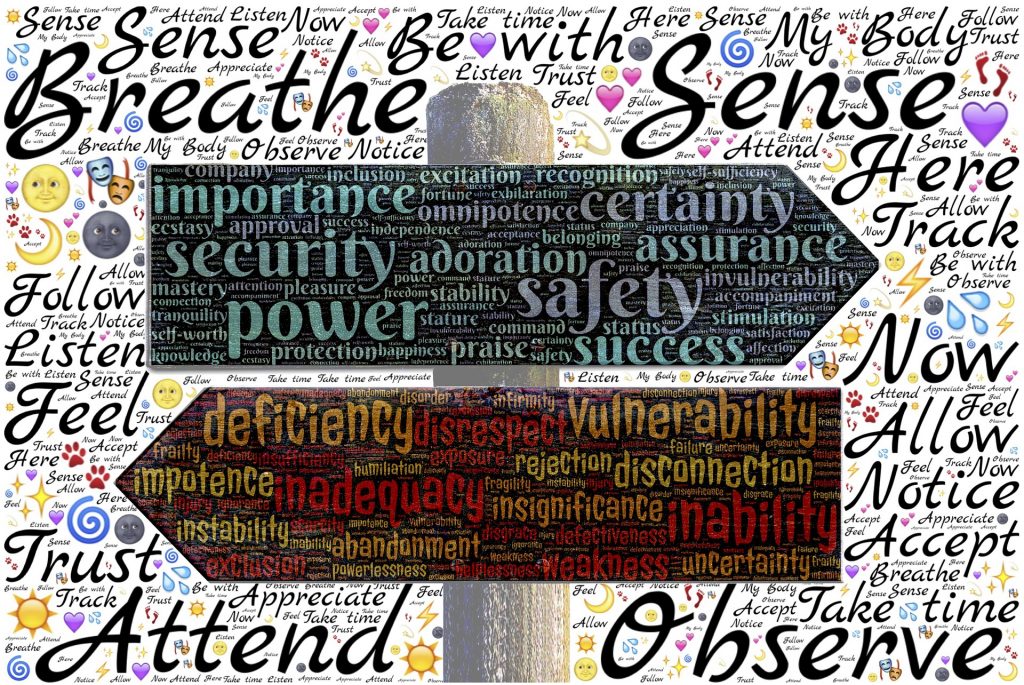
How do these things show up by accident? The way you characterize a character, the settings in which you place them, the way you make them talk, and the things you describe as their values and focus. Marking them as apart from and different simply by physical characteristic. It can show up in their form of dress and the activities they take part in. Trivializing experiences that have been most serious in a community and saying ‘why don’t they just (insert topic here). It’s so simple.” Is it that simple?
When this is allowed into wide acceptance, it not only leads to the erasure of culture (homogenization), it leads to very real harm to other humans. Think of witch burnings. Murders may not be as frequent as they were in old times, but destroying lives (ending income and opportunity, halting relationships for example) is very much still in play. Ostracization can lead to violent outcomes (self-abuse, loss, and the lot). Generational trauma from such actions can cause this to ripple through communities.
So, before you make an off color joke or attempt to engage a discussion with “just a question,” really get to know the topic and all the repercussions it can have on those the work may touch. Ask yourself, does this help? Is it necessary? It’s not a bad idea to engage a sensitivity editor to help you get a handle. It may be as easy as asking a local University Professor or hitting the library and seeking books on your question. (Don’t submit your book. Ask them a question that articulates the ideas and can give you perspective.)
Your perspective will flood the page, like it or not. Make sure it’s a good one. Otherwise, the pushback could ruin your chances of contributing when you intended to do good. Keep in mind, it is no one’s job to coddle you. It’s your job to learn and know. Don’t willfully cause further harm to satisfy a weird kink. Happy researching!
Click on the links in the scroll box below to see how the other authors on the hop have answered this critical question. Don’t forget to subscribe before you go! The hop will arrive in your inbox each Friday without searching for us. No forgetting! See you next time.


Good principles to work with, it’s important not to alienate your potential readership. But I would suggest that you must never shy away from confronting prejudice, if only to expose it for what it is.
100% agree.
Well-done humor can be the most effective way of revolution there is.
Definitely. Thoughtful comedians, for instance, are a huge plus to movements.
Yes, I remember reading a book where the author had described everything to the nth degree, as though just to increase the word count. The book was quite boring, and I gave it up halfway through.
It can really hobble the reader. I worked with an editor to help my first novel. After all the conflicting and unclear feedback from previous editors/critics, I had written myself in circles trying to fix it. I am so grateful to my editor at the time. I finally made that book what it was supposed to be. It’s so important to get useful feedback from experienced editors.